

Digital transformation is now a priority for education systems worldwide, but too often the focus remains on devices and platforms rather than on how technology can strengthen teaching and learning. Ministries frequently struggle to ensure that EdTech investments translate into intended learning outcomes, particularly in schools with diverse infrastructure, connectivity, and capacity.
For the Department of Education (DepEd) in the Philippines, the challenge was clear:
How can technology be leveraged to improve foundational literacy and numeracy (FLN) outcomes across diverse school contexts?
DepEd’s response has been a system-level approach that places FLN at the centre of digital transformation. The forthcoming EdTech Omnibus Policy by the Bureau of Learning and Delivery (BLD) at DepEd aims to create coherence across EdTech initiatives. This will involve supporting teachers in using digital tools effectively and ensuring that budget allocations are informed by evidence. Achieving this requires more than procuring devices: it demands understanding the conditions that allow technology to strengthen teaching, learning, and decision-making across schools.
Learning from Evidence: Shaping a Policy That Addresses Real Learning Challenges
Early in the process, DepEd and EdTech Hub, through EdTech Hub’s Helpdesk under the ASEAN-UK SAGE programme, collaborated to explore global and regional approaches to integrating EdTech in schools and evidence on technology-enabled FLN interventions. The goal was not simply to compile best practices, but to understand what works, under what conditions, and why.
Three key lessons emerged from this evidence.
- First, EdTech succeeds when policies, stakeholders, and institutions are aligned around shared learning goals, rather than operating in fragmented or isolated initiatives/pilots.
- Second, technology improves learning when it complements strong pedagogical practice and is paired with sustained teacher support.
- Third, the context in which schools operate matters deeply, whereby differences in infrastructure, connectivity, and capacity shape whether tools are usable, equitable, and sustainable.
Key Lesson: EdTech policies succeed when they are human-centred, responsive to teachers’ and school needs, not just system-level assumptions.
For DepEd, these lessons clarified the need to move beyond device-centric initiatives toward coordinated approaches that address FLN gaps in diverse school contexts.
Stress-Testing Assumptions With Schools: Application of the Digital Maturity Assessment Tool
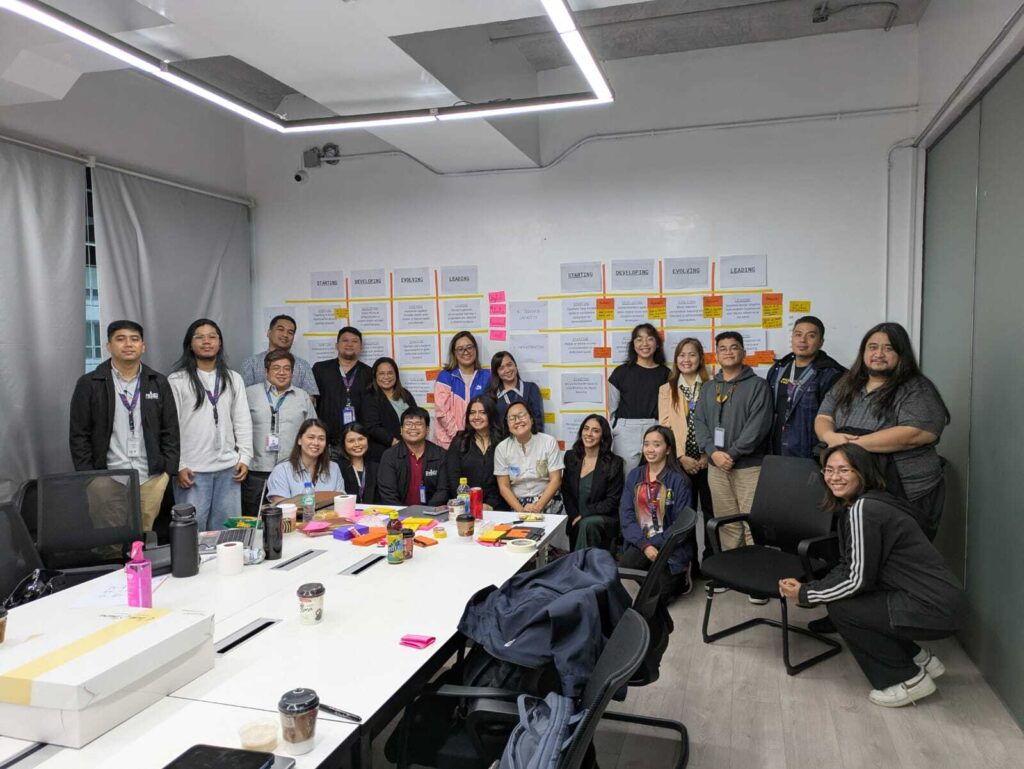
To understand how schools experience EdTech in practice, DepEd stress-tested the Digital Maturity Assessment (DMA) tool with EdTech Hub support. Rather than treating the DMA as a static checklist, the process used a sandbox approach: a structured, iterative testing method that allows policies and tools to be explored in real-world contexts before wider rollout. By letting school leaders and teachers actually use the DMA tool and talk through how they would answer it, we learned practically how schools perceive readiness, what matters to teachers when integrating technology, and how it connects to everyday teaching and learning needs and realities.
The data collection mechanisms were stress-tested across select schools in Nueva Ecija and Rizal with varying resources, revealing that digital maturity is far more than infrastructure. Teacher capability, pedagogical confidence, and available support matter just as much, and offline realities must be accounted for. Participants, comprising school heads and teachers, also emphasised the importance of psychological safety: schools need to feel confident engaging with the tool without fear of judgment or scrutiny.
These insights reshaped how the DMA captures school contexts and highlighted a broader lesson for digital transformation.
Key Lesson: Policies and tools succeed when grounded in the realities, expertise, and perspectives of teachers and school leaders, not just distant, system-level assumptions.

Building Evidence Into Decision-Making
Recognising that learning-focused EdTech requires strong evidence systems, DepEd engaged EdTech Hub to co-develop a monitoring and evaluation (M&E) framework supplemented with a Theory of Change. Using a Do-Measure-Learn approach, bureaus mapped assumptions, identified gaps in existing data systems, and defined indicators to track progress on FLN and system goals.
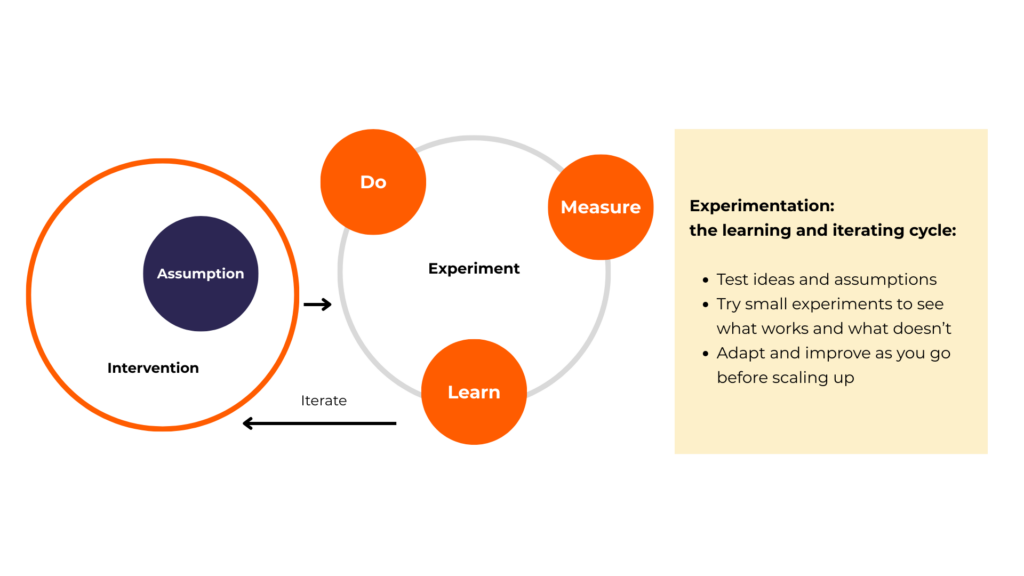
This process surfaced critical insights for decision-making. Blind spots in data collection and analyses were identified, highlighting areas where targeted interventions could have the greatest impact. Cross-bureau collaboration improved alignment — reducing fragmentation, clarifying how different units could contribute to a shared evidence base, and strengthening data for decision-making strategies across bureaus. Most importantly, the process reinforced that evidence should actively inform both scaling and adaptation, enabling iterative improvements that respond to real learning challenges.
Lessons for Digital Transformation and FLN
The EdTech Omnibus Policy development process highlighted several key lessons for designing and implementing effective digital transformation in education:
- Digital transformation should be viewed as a means to improve learning, not an end in itself.
- Teachers are central to success; their confidence, competencies, and ongoing professional development determine whether technology enhances learning.
- Context-aware solutions are more likely to scale sustainably and equitably, helping to reduce costly failures.
- Structured evidence systems are essential to create feedback loops that enable continuous refinement based on classroom needs.
Together, these insights highlight that aligning digital procurement with learning priorities, centring teacher perspectives, and strengthening feedback loops are critical to ensuring EdTech translates into meaningful improvements in teaching and learning. More broadly, this experience demonstrates how technical assistance embedded in policy co-creation can support data-driven decision-making, align procurement with FLN objectives, and inform more coherent, teacher-informed, and context-responsive EdTech approaches.
Implications Beyond the Philippines
While the EdTech Omnibus Policy responds to the Philippine context, its lessons are relevant to other education systems navigating digital transformation. Prioritising pedagogy and learning outcomes over hardware, actively engaging teachers and school leaders in policy design, and maintaining strong feedback loops between evidence and practice can help ensure that technology adoption produces meaningful improvements in teaching and learning.
Looking Ahead: Iterative Learning for Long-Term Impact
As the EdTech Omnibus Policy moves into implementation, iterative testing and learning to ensure consistent alignment with change pathways is crucial for long-term impact. Structured sandboxes, ongoing stakeholder engagement, feedback loops, and M&E processes ensure that tools and strategies remain responsive to school needs and realities. This iterative approach strengthens institutional learning while keeping human-centred learning, context-aware technology integration, and system coherence as DepEd’s core pillars at the heart of digital transformation.
This work is part of the portfolio of projects delivered by the ASEAN-UK SAGE programme. The ASEAN-UK SAGE programme is delivered by the British Council and SEAMEO Secretariat, in partnership with EdTech Hub and Australian Council for Educational Research (ACER), and is an ASEAN cooperation programme funded by the UK.