

This is one of three blog posts exploring EdTech Hub’s recent SEND work, focused on how technology can help ensure learners with neurodevelopmental conditions have equitable access to education. Across the series, we draw on our primary research in Ghana and Malawi, alongside our cross-cutting work in implementation science and low-cost nudges.
Emma Thom, is a special needs teacher at Likuni Primary School in Malawi, and she begins her day in a small resource centre at Likuni Girls Primary School in Malawi. Around her sit 28 learners with special educational needs and disabilities (SEND), each with a different story, a different pace of learning, and a distinct set of needs that calls for personalised support. Yet her responsibility extends well beyond this classroom. She is expected to assess and support more than 200 learners with Individualised Education Plans (IEPs) across 11 schools in the Likuni Zone.
I record my learners in an A5 exercise book, which I bought using my own money because we don’t have (the) stationery (needed) to print screening tools or hard covers for proper filing,” Emma explains.
In this environment, tracking progress becomes a daily struggle. Records can be lost, follow-ups delayed, and in some cases, learners themselves can fall through the cracks.
The Challenge — Inclusive Education at Scale
Emma’s experience reflects a systemic challenge. Across Malawi, learners with special educational needs are often identified late. Even when they are identified, consistent support remains difficult to sustain. Limited resources, a shortage of specialised expertise, and heavy reliance on paper-based systems compound these challenges.
As a result, learning poverty among learners with special educational needs is much higher than the general population, contributing to elevated rates of grade repetition and school dropout.
The REACH Project: An Evidence Driven Response
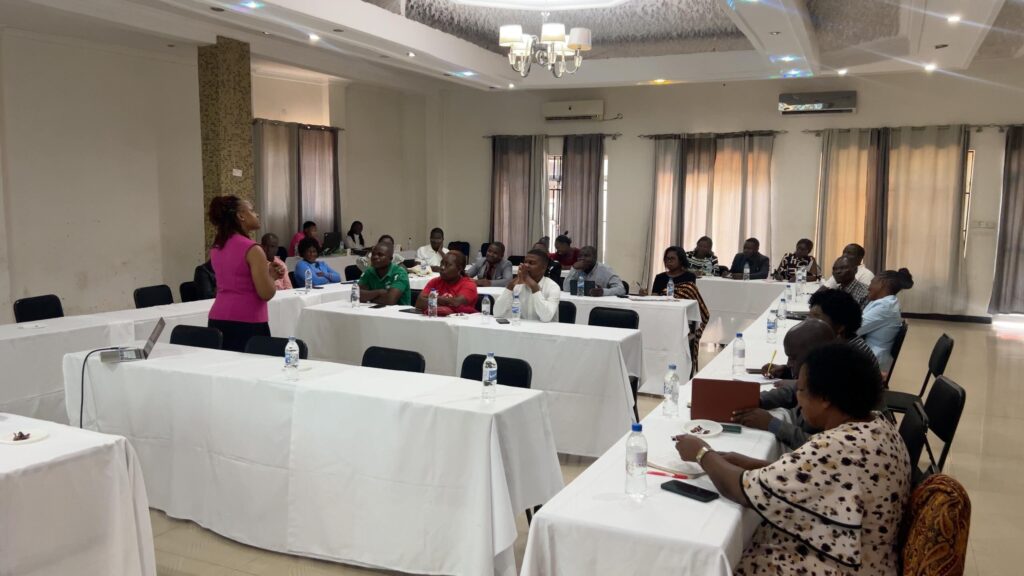
The Remote Enablement and Assessment for Children’s Health and Education (REACH) project is an EdTech implementation research study designed to test practical solutions to these challenges. The project operates across resource centres in three districts — Lilongwe Rural East, Lilongwe Rural West, and Salima working with learners, teachers, and the Ministry of Education to generate robust evidence on what works.
REACH is implemented by Fount for Nations (FFN) and supported by EdTech Hub, which provides the research design, methodological oversight, and evidence framework for the study. The project works in close collaboration with the Malawi Ministry of Education.
Our work will start by digitising Ministry of Education digital screening tools and the digital development of IEPs.”
– Carolyn Chidandale, Programmes Manager at Fount for Nations
Rather than introducing entirely new systems, the project builds on existing tools and practices, aiming to strengthen and streamline the support already available to learners with special educational needs and disabilities.
EdTech Hub’s Role: Rigorous Research for Real Impact
EdTech Hub is a global research partnership dedicated to improving education through technology in low-and middle-income countries. Within the REACH project, EdTech Hub plays a central role in shaping how the intervention is designed, studied, and evaluated. Edtech Hub along with FFN designed an implementation research study that evaluates whether digital intervention improves learner outcomes and examines how it can be implemented effectively at scale.
As a supporting partner, EdTech Hub also oversees the development of the data collection toolkit, including teacher assessment instruments, Individualised Education Plans (IEPs), and learner progress-monitoring tools. This approach ensures that the evidence generated is not only locally relevant but also sufficiently rigorous to inform policy and decision making at the national level.
How Digital Tools Are Changing Practice
With digital tools, teachers like Emma can more easily track learner progress, maintain records, and ensure that no child is overlooked. The digital platform the Digital Inclusive Practice Platform (DIPP) supports teachers in conducting structured screenings, developing IEPs, and monitoring learners’ progress over time.
One of the most persistent challenges within Malawi’s inclusive education system is the limited availability of therapists and specialist support for classroom teachers. REACH addresses this gap through remote supervision, enabling teachers to consult specialists and receive timely guidance through digital channels without requiring in-person access to these professionals.
Partnering with the Government
The Ministry of Education has placed strong emphasis on early identification as a critical step towards improving outcomes for learners with special educational needs. REACH has been designed in close alignment with Ministry priorities and structures, ensuring that the intervention supports existing national efforts to strengthen inclusive education.
We are in support of this research because it will help us understand what type of technology is needed to improve screening and support for learners with special educational needs in Malawi.”
– Senior Official, Malawi Ministry of Education
By generating evidence that is credible, replicable, and grounded in national systems, REACH aims not only to test a promising approach but also to provide insights that can inform future planning, policy development, and potential scale-up across the country.
What’s Next
The REACH project is in its early stages, but the foundations are strong. With rigorous research oversight from EdTech Hub, committed implementation by Fount for Nations, and the backing of the Malawi Ministry of Education, the project is well positioned to generate evidence to inform important decisions about scaling support for learners with special educational needs..
For teachers like Emma Thom, the hope is simple: a system that supports every learner without requiring teachers to fund basic resources out of their own pockets. Bottlenecks to scaling like this have been identified through the implementation research approach of this collaboration which puts practical solutions alongside thorough systemic analysis, to drive sustainable change.
Related Research from Malawi
Tech-Enabled Inclusion for Strengthening Malawi’s Education Policy for SEND Learners
In Malawi, an estimated 14% of children aged 5 to 17 have at least one functional difficulty, yet fewer than one in three children with disabilities attend school. Despite…
Baseline Report for Implementation Research on Screening and Supervision of Learners with SEND in Malawi
This baseline evaluation provides a comprehensive assessment of the current state of inclusive education across six primary schools in the Lilongwe and Salima districts of Malawi. The findings from…
Supporting Learners with Neurodevelopmental Disabilities: Mixed Method Evidence on the Use and Accessibility of Technology-Enabled Tools for Screening, Individualised Education Planning and Remote Supervision in Ghana
Despite the growing global call for inclusive education, neurodivergent learners in low-resource contexts, such as Ghana, frequently face significant barriers, including delayed screening and inadequate individualised support. This study focuses…
EdTech for Special Educational Needs and Disabilities in Malawi: Setting the Research Agenda
Image showing attendees of the two-day workshop for SEND in Malawi. Credit: Charity Kanyoza. Workshop Goals Over 240 million children are living with special educational needs and disabilities (SEND) across…