
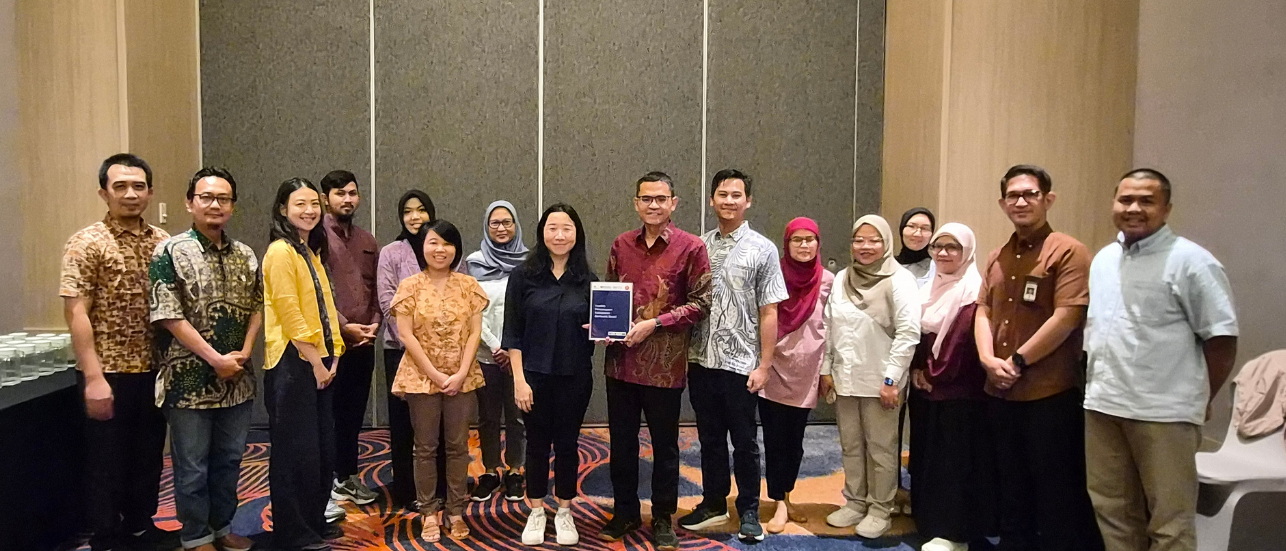
Overview: This sandbox focused on strengthening the internal capacity of Ministry units to move from administrative compliance toward evidence-based policy stewardship.
- Focus: Supporting ministry units with varying administrative capacity and policy literacy standardise their processes and practices.
- Action: Enabling compliance with the National Policy Quality Index (IKK) across planning, implementation, evaluation, and transparency — with high-level guidance for quick navigation and optional deeper sections to build stronger policy habits over time.
Context
The Ministry of Primary and Secondary Education (MoSPE) of Indonesia operates within a robust framework of institutional accountability. Central to this effort is the National Policy Quality Index (IKK), a standardised assessment facilitated by the National Institute of Public Administration (LAN) to evaluate regulatory effectiveness. For MoSPE, achieving an “Excellent” (80+) IKK score serves as a key performance benchmark, reflecting the Ministry’s commitment to high-quality governance and directly informing its strategic reputation and budgetary planning.
In the real world, policymaking in Indonesia rarely follows a straight line. It is often a whirlwind of urgent mandates and shifting social needs that require us to think on our feet. This creates a challenge: while the IKK expects a neat, step-by-step paper trail, the actual work is fast-paced and fluid. As a result, valuable evidence-based work is frequently lost in translation, leaving units struggling to prove the quality of their policies during formal evaluations.
The Challenge
The core problem the MoPSE team face the MoPSE team face is the “Compliance-Quality Gap,” which manifests across the three pillars of the organisation:
- People: There is a limited overall understanding of the IKK and its requirements. Personnel require targeted capacity-building to strengthen current policy formulation skills.
- Process: Identifiable gaps in the planning, harmonisation, and monitoring & evaluation (M&E) phases lead to operational uncertainty and inconsistent policy outcomes. Additionally, coordination workflows are currently undefined, which creates confusion and hinders efficient decision-making.
- Tools: There is a lack of familiarity with the specific operational frameworks and tools needed to fulfil IKK indicators.
The Hypotheses
IF the toolkit fits into existing policymaking workflows and converts routine administrative work into clear, IKK-aligned evidence, THEN policy units will use it consistently as part of their standard process, SO the design must minimise additional workload, provide clear definitions of acceptable evidence, and allow units to integrate the toolkit into their current procedures.
To test this hypothesis, four design hypotheses were developed across desirability, feasibility, viability, and ethics:
Desirability
IF the toolkit translates daily habits into IKK-aligned evidence without increasing workload, THEN policy units will adopt it as a standard resource, SO the tool must be designed for seamless administrative integration.
Feasibility
IF the toolkit design is modular, THEN units can easily integrate specific sections into their existing workflows regardless of their technical baseline, SO the tool must prioritise Layered Usability (Low-Floor for compliance, High-Ceiling for impact).
Viability
IF the toolkit institutionalises evidence-based habits, THEN it will survive regime changes and administrative transitions, SO the system must build institutional memory.
Ethics
IF the toolkit provides transparent, standardised definitions of “quality evidence,” THEN it ensures a fair evaluation for all units regardless of digital literacy, SO the design must prioritise procedural transparency.
Validation Process
To ensure the project was grounded in evidence, we identified critical assumptions to validate as part of our Sprint 0 (Preparation). We moved beyond “best guesses” to identify exactly what needed to be proven true for the hypotheses to hold:
| Assumptions | Outcome & Validation Method | Implication |
| Evidence-based policymaking is largely absent across MoPSE units. | Key Informant Interviews (KIIs) across units revealed that most teams recognise the importance of evidence-based policymaking and already use approaches to gather and interpret evidence. The main gap lies in the lack of standardised processes and documentation. In addition, policy windows often require quick responses, making extensive evidence gathering impractical. | The toolkit is designed as a modular, plug-and-play resource that helps units apply fit-for-purpose evidence strategies within tight policy windows. |
| Misalignment in terminology between MoPSE and LAN. | Comparing LAN guidance with MoPSE documents, including the Centre of Education Standards and Policy (PSKP) submissions and LAN feedback, revealed structural and terminology differences that create misalignment during the IKK submission process. | The toolkit includes a checklist that maps MoSPE’s internal documents to LAN’s equivalent requirements, suggesting a more unified document structure. |
| Leadership is often engaged too late in the policymaking process. | A review of past policy development processes and KIIs showed that leadership engagement typically occurs during approval rather than during the early design phase. | The toolkit includes a Leader’s Quick Guide to support earlier engagement and encourage an iterative, evidence-based process. |
Sprint Journey
The sprint cycles were used to test the assumptions identified in Sprint 0. Across two phases, the team moved from early prototypes to refining the approach. In each sprint, the team defined the focus, tested ideas, gathered feedback from Ministry stakeholders, and used those insights to improve the toolkit’s desirability, feasibility, viability, and ethics.
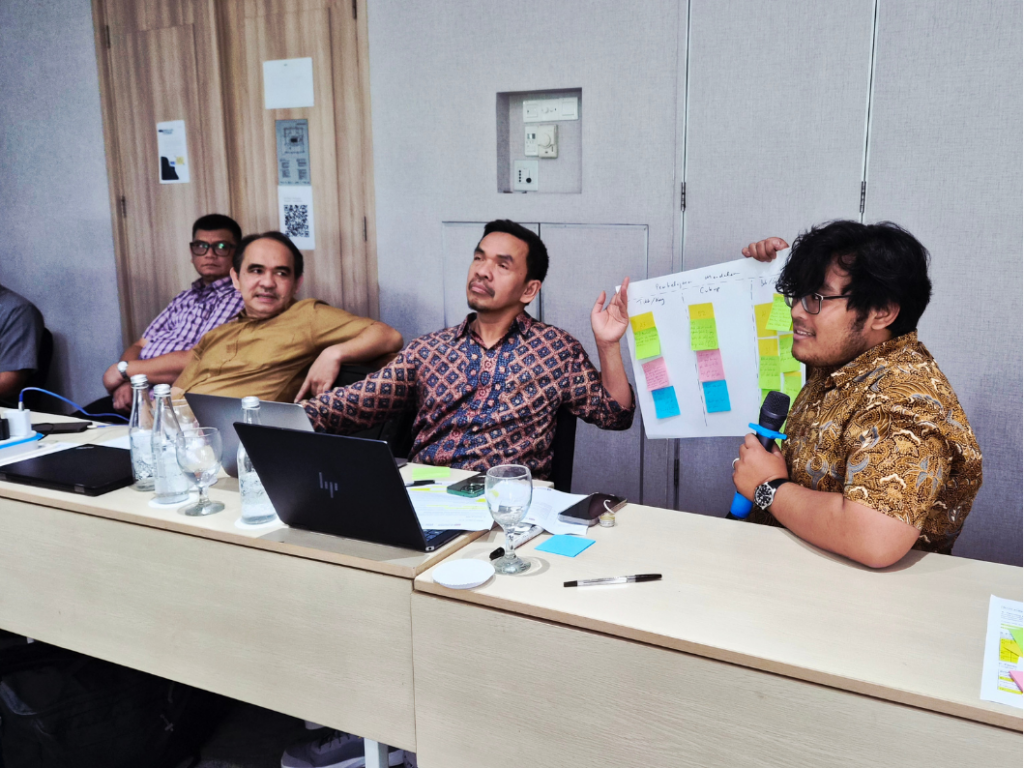
Sprint 1
Prototyping & Initial Testing.
Scope
Co-designing and testing a modular toolkit that connects global evidence standards with the fast-paced realities of policymaking in Indonesia.
Do
Developed an initial version of the toolkit aligned with global practices and Indonesia’s IKK, designed as a flexible, modular resource for high-velocity policymaking contexts.
Measure
Tested the toolkit in real policy settings with selected units in the ministry and gathered user feedback for iteration. This confirmed that policymaking often requires decisions such as shaping policy directions, selecting programme options, or advancing draft regulations before “perfect” data is available.
Learn
Synthesised insights from testing to guide the next iteration, prioritising relevance, usability, and scalability.
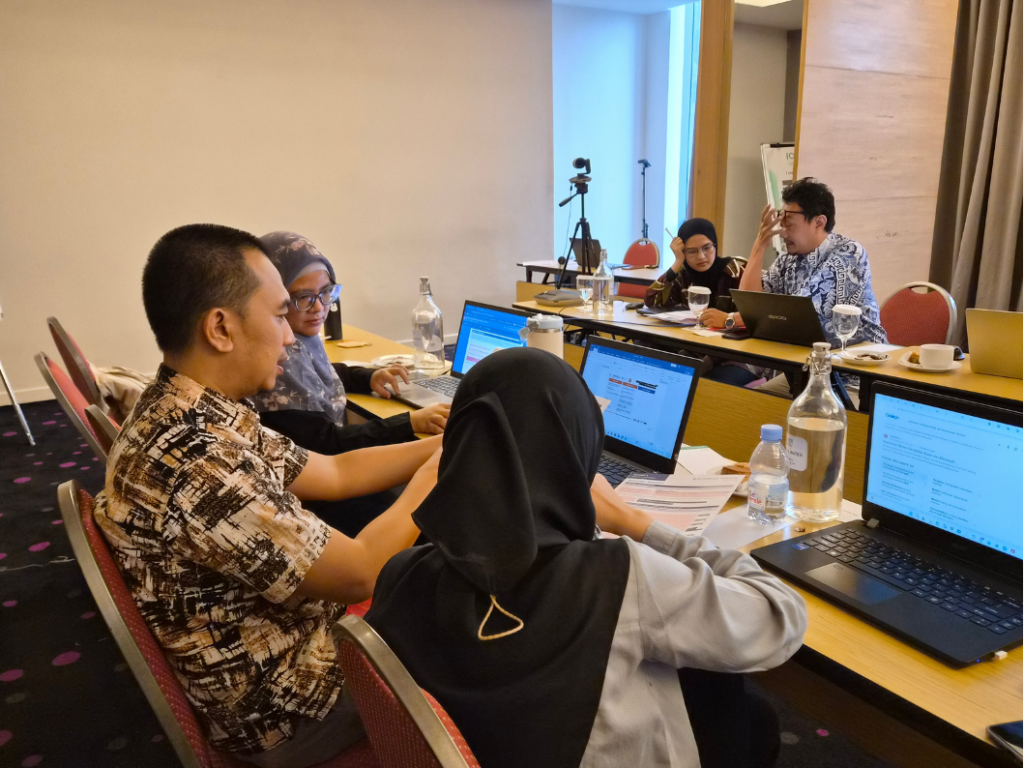
Sprint 2
Production Scaling & Refinement.
Scope
Integrating the toolkit into MoPSE’s existing workflows and expanding its use to include internal evaluators, helping ensure that the evidence produced aligns with IKK standards.
Do
Improved the practicality of the toolkit by embedding it within existing MoPSE workflows. Designed as a modular, plug-and-play resource aligned with PSKP’s policy development processes, the toolkit can be used at different stages of the policy cycle while introducing an agile approach that allows teams to test ideas, reflect on emerging evidence, and adapt policy design within their ongoing workflows.
Measure
Tested the refined toolkit with MoPSE to assess its value in strengthening evidence-based policymaking. Testing revealed a key gap: the toolkit addressed policy leaders and technical teams but did not explicitly consider internal evaluators responsible for assessing policy quality against IKK standards before formal submission to LAN (the National Administrative Body responsible for IKK audits).
Learn
Refinements focused on three areas: strengthening leadership buy-in through a Leader’s Quick Guide, redesigning the toolkit for three core users (policy leaders, technical teams, and internal evaluators/PSKP), and incorporating internal Ministry examples to improve usability, trust, and practical application.
Transitioning to Implementation
After the toolkit was handed over to MoPSE colleagues, a final capacity-building workshop was conducted to practise using it in a real policy process. During the workshop, PSKP acted as a “coach,” supporting other units as they prepared their formal IKK submissions.
The toolkit functions as both a self-assessment tool and an evidence checklist aligned with IKK criteria. Units assess their policies against specific indicators and are directed to relevant modules that explain key concepts. For example, if a self-assessment statement reads “Policy information is transparent, easy to access, and available in various formats,” the module clarifies what is meant by terms such as “transparent” and “easy to access.”
Through this process, units can review their documentation, assess readiness, and identify which policies have the strongest evidence for IKK submission. Since IKK requires policies to have been implemented for at least three years, the toolkit currently serves mainly as a self-assessment and evidence-preparation tool for existing policies.
Going forward, the toolkit will also be used earlier in the policy process. While it currently acts as a diagnostic tool, helping teams check how closely their policies align with IKK standards, its use during policy development will allow it to function as a design scaffold—shaping how evidence is generated and documented from the start, and supporting the institutionalisation of evidence-based policymaking process.
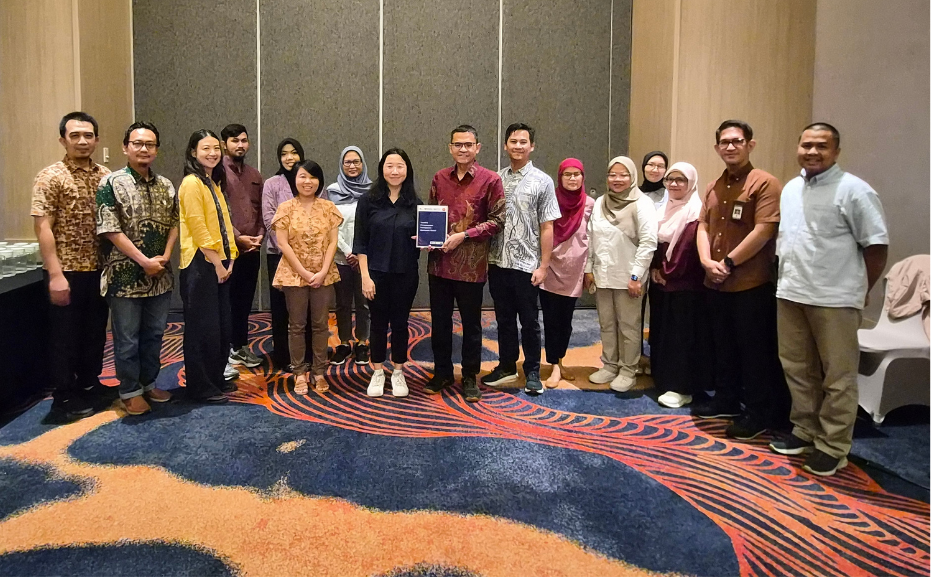
Outcome and Reflections
The toolkit helped make evidence-based policymaking feel more practical and relevant to daily work. By translating existing administrative activities into clearly defined forms of IKK-aligned evidence, it reduces the perception that evidence-based policymaking requires entirely new processes. Instead, units are beginning to see how their existing work could be organised and documented in ways that meet evaluation standards.
Equally important was the shift in engagement among MoSPE colleagues involved in the process. Through the co-design sprint cycles and multiple iterations of the toolkit, familiarity and ownership gradually developed. Participants moved from initially learning about the sandbox process, to actively providing feedback during testing of the toolkit prototype, and eventually to advocating for its use across other units during the capacity-building workshop.
Dr. Irsyad Zamjani, Head of the Centre of Education Standards and Policy (PSKP), reflected:
The sandbox process helped the Ministry develop a tool that we can use together as an institution—not only to improve our scores on the IKK index, but also as a broader tool to help us work better. It gives us a shared language, common tools, and a more standardised process for practising evidence-based policymaking.”
Through this iterative co-design process, the toolkit evolved from an experimental prototype into a shared institutional resource. It now provides MoSPE with a common framework for organising evidence, aligning internal processes with IKK requirements, and strengthening the practice of evidence-based policymaking across the Ministry.
Related Work
This work is part of the portfolio of projects delivered by the ASEAN-UK SAGE programme. The ASEAN-UK SAGE programme is delivered by the British Council and SEAMEO Secretariat, in partnership with EdTech Hub and Australian Council for Educational Research (ACER), and is an ASEAN cooperation programme funded by the UK.
This sandbox was led by Aprillia Chrisani, Resiana Rawinda and Jazzlyne Gunawan, with support from Sangay Thinley and Gita Luz.